
The UAE is home to one of the most ambitious digital healthcare ecosystems in the world. From Abu Dhabi’s advanced hospital networks to Dubai’s fast-growing private clinic sector, medical data now flows through cloud systems, connected devices, and mobile patient portals every single second. That connectivity brings enormous clinical benefits and equally enormous cyber risk.
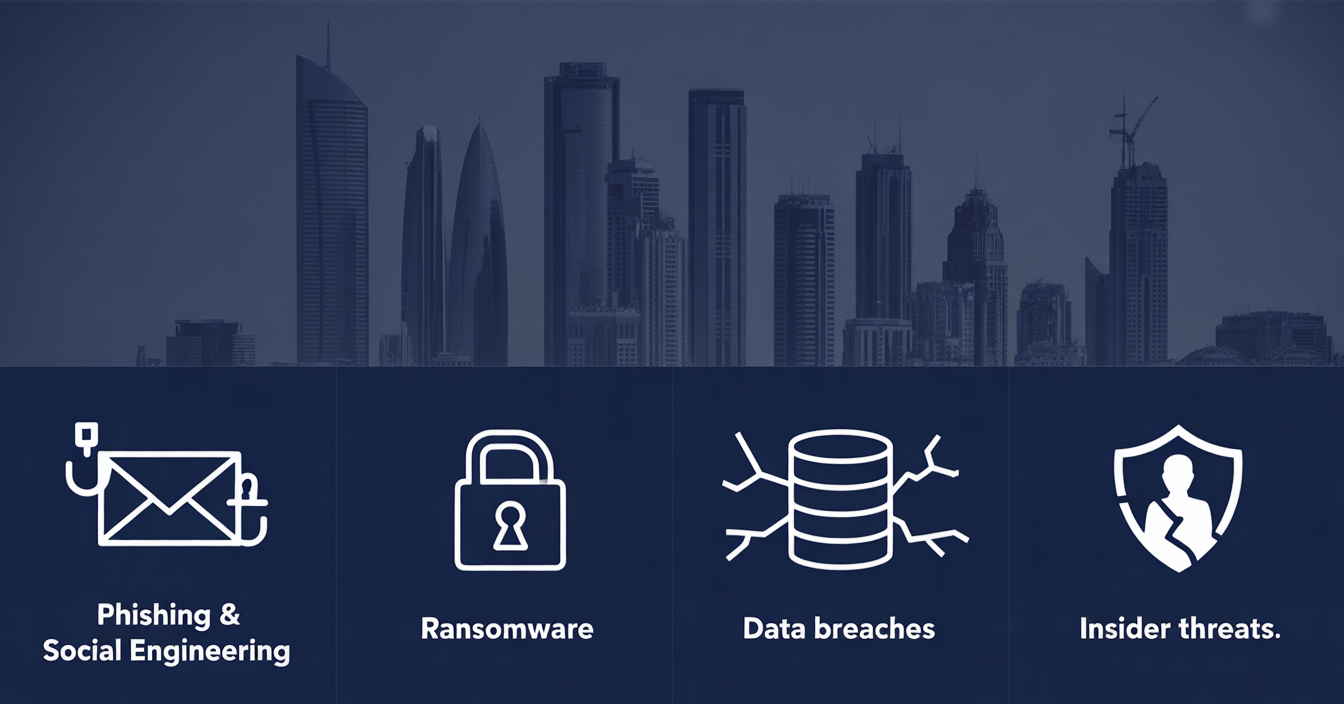
Healthcare organisations in the UAE are now the most targeted sector for ransomware, phishing, and data theft, according to the UAE Cybersecurity Council. A single breach can expose thousands of patient records, trigger regulatory penalties under the UAE Personal Data Protection Law (PDPL), and permanently damage the trust a clinic has spent years building.
This is why Freit Technologies built its cybersecurity practice specifically around the healthcare sector. With a team experienced in PCI DSS, ISO 27001:2022, IoMT device security, and 24/7 SOC monitoring, Freit provides UAE clinics and hospitals with the same calibre of protection once reserved for large enterprises. Explore the full Freit Cybersecurity Services offering to understand how each layer works.
Table of Contents
Why UAE Healthcare Organisations Are Prime Targets

Healthcare is uniquely vulnerable for three reasons. First, patient records contain the richest combination of personal, financial, and biometric data available anywhere, making them far more valuable on the dark web than credit card numbers alone. Second, clinical environments rely on legacy infrastructure and connected medical devices that were never designed with cybersecurity in mind. Third, care continuity pressures mean staff often accept shortcuts in security protocols to keep operations running.
The UAE’s rapid move to cloud-based EMR platforms, digital insurance workflows, and patient engagement portals has created a vast and rapidly growing attack surface. According to the World Economic Forum GCC Cyber Resilience report, Gulf healthcare organisations saw a 74% increase in cyberattack attempts in 2024, with phishing and ransomware accounting for the majority of successful breaches.
The consequences extend beyond financial loss. A ransomware attack that locks clinicians out of patient records mid-consultation can directly endanger lives. IoMT devices — infusion pumps, diagnostic imaging systems, connected monitoring equipment — that are compromised can produce false readings or become entry points into the entire hospital network.
The UAE Regulatory Landscape: PDPL, DHA, and Beyond
Operating a clinic or hospital in the UAE means navigating a layered compliance environment. Each framework carries real enforcement weight, and non-compliance can result in significant financial penalties and reputational damage.
UAE Personal Data Protection Law (PDPL)
Introduced in 2021, the PDPL is the UAE’s first comprehensive data privacy legislation. It requires organisations to collect data lawfully, store it securely, obtain informed consent, and notify authorities of breaches within defined timeframes. For healthcare providers, patient health records fall squarely within its highest protection category.
DHA, Nabidh, and HAAD Requirements
The Dubai Health Authority (DHA) mandates that all licensed healthcare facilities maintain NABIDH-compliant systems for patient data sharing. Facilities in Abu Dhabi must align with HAAD (Health Authority Abu Dhabi) frameworks. Both require not just technical integration but demonstrable security controls around how patient data is accessed, transmitted, and stored.
HIPAA and International Standards
Many UAE healthcare providers that serve international patients or work with global insurance partners must also maintain HIPAA compliance. The Freit Technologies platform is built to HIPAA standards, ensuring patient data is encrypted at rest and in transit, access is role-based, and audit trails are maintained for every interaction with clinical records.
ISO 27001:2022 Implementation for UAE Healthcare
ISO 27001:2022 is the globally recognised standard for Information Security Management Systems (ISMS). For a UAE clinic or hospital, achieving ISO 27001 certification signals to patients, insurers, and regulators that your organisation takes data protection seriously and has the documented controls to prove it.
The 2022 revision introduced updated Annex A controls specifically relevant to healthcare, including stronger guidance on cloud security, supplier relationships, and threat intelligence. Read more about why ISO 27001 matters for UAE organisations and how the standard is structured at the ISO official page.
Freit’s ISO 27001:2022 Implementation and Support service covers the complete journey from scoping through certification:
- ISMS Scope Definition and Risk Assessment aligned with ISO 27005
- Policy and Control Documentation covering all Annex A controls
- Internal Audit Support and non-conformity management
- Stage 1 and Stage 2 Audit Readiness preparation
- Ongoing Compliance Maintenance to sustain certification post-audit
For healthcare organisations already running the Medic EMR platform, the ISMS implementation process is significantly faster because many of the required technical controls — access management, audit logging, encryption — are already embedded in the platform’s architecture.
24/7 SOC Monitoring: Your Clinic’s Always-On Defence
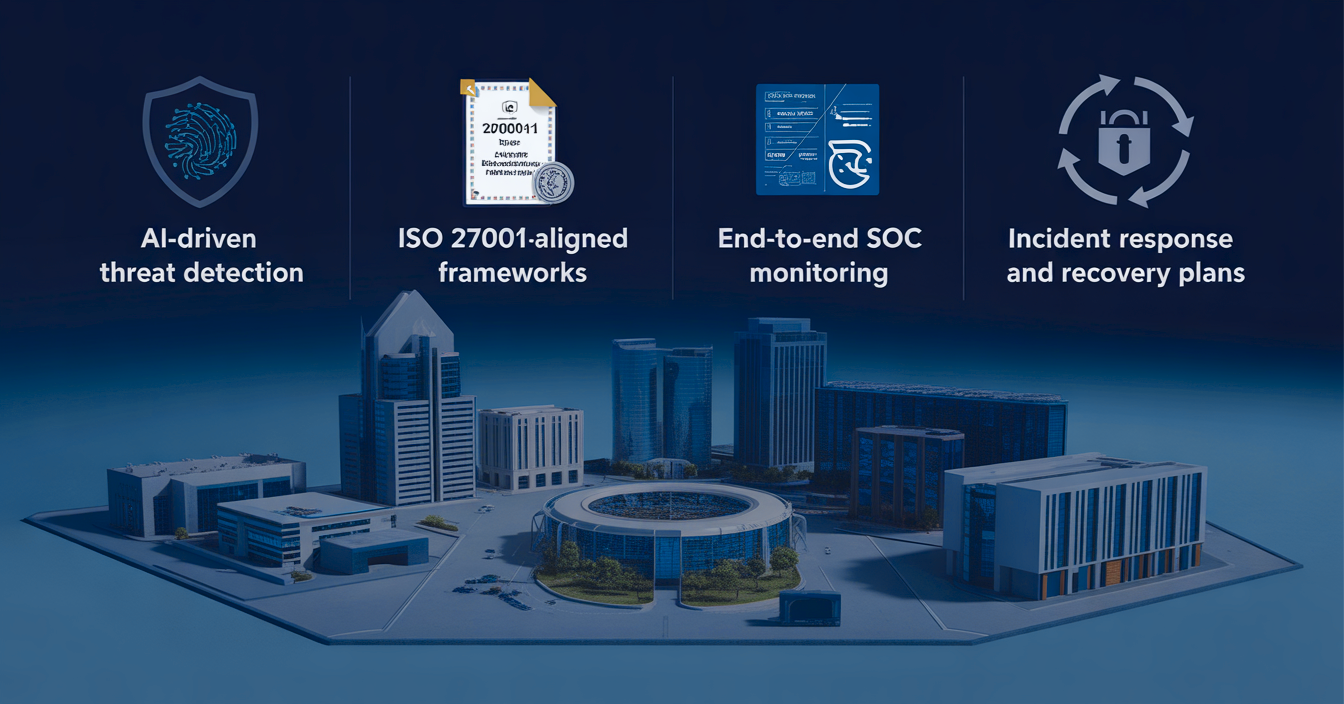
A Security Operations Centre (SOC) is the nerve centre of any serious cybersecurity programme. It combines human expertise with AI-driven tooling to monitor every log, alert, and anomaly across your infrastructure around the clock. In a healthcare setting, this is not optional — attacks on clinical systems do not wait for business hours.
Freit’s Managed Security Operations service deploys industry-leading SIEM and EDR platforms — including Microsoft Sentinel, CrowdStrike, and QRadar — to deliver:
- Real-time alert triage across cloud, hybrid, and on-premises systems
- AWS log analysis including CloudTrail, ELB, and VPC Flow Logs for cloud-hosted EMR environments
- Phishing and malware investigation with rapid containment protocols
- Automation to reduce MTTD and MTTR (mean time to detect and respond)
- Monthly threat intelligence reports tailored to the healthcare sector
One Freit client, a cloud SaaS company with significant healthcare data, reported that the SOC team neutralised a phishing attack within minutes of initial detection. For a clinic where email compromise could expose hundreds of patient records, that speed is the difference between a contained incident and a reportable breach.
Healthcare and IoMT Security: Protecting Connected Medical Devices
The Internet of Medical Things (IoMT) represents one of the fastest-growing and least-secured areas of healthcare IT. A modern hospital deploys hundreds of network-connected devices: infusion pumps, MRI systems, patient monitors, diagnostic equipment, and smart wearables. Each one is a potential entry point for an attacker.
Freit’s Healthcare and IoMT Security Solutions address this challenge with a specialised approach built for clinical environments:
- IoMT Device Risk Assessment identifying every connected device on your network and its associated vulnerabilities
- Network Segmentation isolating clinical devices from general IT infrastructure to limit lateral movement by attackers
- Threat Hunting across healthcare networks using tools specifically designed for medical environments including Armis, Ordr, and Cynerio
- Policy Development and Compliance Alignment with HIPAA, ISO 27001, and NIST healthcare-specific frameworks
- Incident Response Planning tailored to the unique operational constraints of clinical settings
Given that Freit also builds and manages the Medic EMR platform used by over 50 UAE clinics, their IoMT security team understands exactly how clinical workflows intersect with connected infrastructure — a depth of contextual knowledge that generic cybersecurity providers simply cannot match.
PCI DSS Compliance for Healthcare and Fintech in the UAE
Healthcare organisations that process insurance payments, co-payments, or subscription billing must also comply with PCI DSS (Payment Card Industry Data Security Standard). Version 4.0, introduced in 2024, introduced significant new requirements around authentication, network monitoring, and targeted risk analysis.
Freit’s PCI DSS and Regulatory Compliance Consulting service guides healthcare and fintech organisations through every stage of the compliance process:
- PCI Gap Assessments and Scope Validation to define exactly what falls within your cardholder data environment
- RoC and AoC Drafting and evidence collection for formal audit submissions
- Risk Matrix Development and disaster recovery and business continuity plan review
- Compensating Controls using the PCI 4-part methodology for environments where standard controls are not feasible
- Continuous Compliance Maintenance to stay audit-ready year-round
One payment processor working with Freit reported passing PCI DSS v4.0 in record time, citing the team’s responsiveness and deep audit knowledge as the primary factors in their success.
Cloud Security for UAE Healthcare Infrastructure
The shift to cloud-based healthcare platforms has accelerated significantly across the UAE. Clinics running Medic EMR, patient portals like Care by Freit, and insurance integration systems through eClaimLink are all operating in cloud or hybrid environments that require specialist security oversight.
Freit’s Cloud Security and Architecture Review service ensures that your AWS, SaaS, or hybrid environment is configured to resist both external attacks and internal misconfigurations — the latter being responsible for a significant proportion of cloud data breaches:
- Secure architecture and network design reviews
- IAM policies and AWS GuardDuty setup
- Log retention, monitoring, and alerting via CloudTrail and CloudWatch
- Compliance mapping across PCI, ISO 27001, and HIPAA
- DevSecOps recommendations for development teams building healthcare applications
Vulnerability Management and Penetration Testing
Knowing your vulnerabilities before an attacker exploits them is the foundation of proactive cybersecurity. Freit’s Vulnerability Management and Penetration Testing service systematically identifies and validates weaknesses across your clinical systems, web applications, and network infrastructure.
- External and Internal Vulnerability Scanning using Nessus and Nmap
- Penetration Testing across web applications, mobile apps, and networks
- Patch Management Review with prioritised remediation guidance
- Red Team and Blue Team Exercises to test both attack simulation and detection capabilities
- Risk-Based Reporting that business and technical stakeholders can both act on
The UAE National Cybersecurity Strategy and What It Means for Your Clinic
The UAE government has made cybersecurity a national strategic priority. The UAE National Cybersecurity Strategy sets out a comprehensive framework for protecting critical infrastructure, including healthcare, across the Emirates. The UAE Cybersecurity Council coordinates national cyber defence, sets unified standards, and responds to large-scale threats.
For individual healthcare organisations, this national framework translates into practical obligations. Clinics and hospitals must demonstrate that they have implemented appropriate technical and organisational controls to protect patient data. Failure to do so exposes them not only to cyberattacks but to regulatory scrutiny under the PDPL and DHA requirements.
As highlighted in the World Economic Forum’s analysis of UAE cybersecurity leadership, the UAE is positioning itself as a regional benchmark for cyber resilience, with the expectation that private sector organisations — including healthcare providers — match the standards being set at the national level.
How Freit Technologies Integrates Cybersecurity with Healthcare Technology
Most cybersecurity providers approach healthcare as a vertical they serve. Freit Technologies is different — cybersecurity is embedded into the healthcare technology they build and manage.
The Medic EMR platform is built to HIPAA standards from the ground up, with role-based access controls, end-to-end encryption, and full audit trail capabilities. The Care patient portal integrates securely with Nabidh, Riayati, and eClaimLink while maintaining strict data isolation between patient records. Every product Freit ships is designed so that their cybersecurity team can monitor, audit, and defend it effectively.
This integration means that when a Freit cybersecurity engineer investigates an anomaly in your system, they already understand the clinical workflow context behind it. They know that a spike in data access at 2am could be a night shift nurse, a legitimate emergency, or a credential-stuffing attack — and they have the tools and institutional knowledge to tell the difference within minutes.
To see the full range of cybersecurity capabilities available to UAE healthcare organisations, visit the Freit Cybersecurity Services page. To learn more about the healthcare technology platform that underpins this security posture, explore Freit Technologies.
Frequently Asked Questions
What cybersecurity services does Freit Technologies offer UAE clinics?
Freit offers a comprehensive suite of healthcare-focused cybersecurity services including 24/7 SOC monitoring and managed security operations, ISO 27001:2022 implementation and certification support, PCI DSS v4.0 compliance consulting, Healthcare and IoMT device security, cloud security architecture reviews for AWS and hybrid environments, vulnerability management and penetration testing, and threat intelligence and cyber risk advisory. All services are delivered with specific expertise in UAE healthcare compliance requirements including DHA, NABIDH, HIPAA, and the PDPL.
Why is cybersecurity especially important for UAE healthcare organisations?
Healthcare organisations hold some of the most sensitive and valuable data available, including patient health records, biometric information, insurance details, and financial data. The UAE’s rapid shift to cloud-based clinical systems, connected medical devices, and digital patient portals has significantly expanded the attack surface for cybercriminals. Regulatory frameworks including the PDPL and DHA requirements also place legal obligations on healthcare providers to protect patient data, with penalties for non-compliance.
What is ISO 27001:2022 and does my clinic need it?
ISO 27001:2022 is the internationally recognised standard for managing information security. Achieving certification demonstrates that your organisation has implemented a structured, risk-based Information Security Management System (ISMS) with documented controls and continuous improvement processes. For UAE clinics and hospitals, ISO 27001 certification is increasingly expected by insurers, enterprise clients, and regulatory bodies as evidence of a serious commitment to data protection. Freit supports the full certification journey from initial scoping through to audit readiness.
What is IoMT security and why does it matter for hospitals?
IoMT stands for Internet of Medical Things — the category of network-connected clinical devices including infusion pumps, patient monitors, diagnostic imaging systems, and smart wearables. These devices often run on legacy software, lack built-in security controls, and communicate over unencrypted protocols, making them attractive targets for attackers seeking to access hospital networks. A compromised IoMT device can serve as an entry point for ransomware, produce falsified clinical readings, or become a tool for lateral movement across the hospital’s entire IT infrastructure. Freit’s IoMT security practice specifically addresses these risks using tools including Armis, Ordr, and Cynerio alongside network segmentation and ongoing threat hunting.
Does Freit provide SOC monitoring for small clinics or only large hospitals?
Freit provides managed SOC services to organisations of all sizes. Small and medium-sized clinics that cannot justify the cost of an in-house security team benefit significantly from Freit’s SOC-as-a-Service model, which delivers enterprise-grade 24/7 monitoring, threat detection, and incident response at a fraction of the cost of internal staffing. The service scales to the specific infrastructure profile of each organisation, whether that is a single-location clinic running cloud-based EMR or a multi-site hospital with on-premises and cloud hybrid systems.
How does Freit’s cybersecurity service connect to its healthcare technology platform?
Freit builds and manages the Medic EMR platform and Care patient portal used by over 50 UAE clinics. This means the cybersecurity team has deep, first-hand knowledge of the clinical systems they are protecting. Security controls are embedded into the platform architecture rather than added as an afterthought, and the team can monitor, audit, and respond to threats with an understanding of clinical workflow context that external security providers cannot replicate.
What is the UAE PDPL and how does it affect my clinic?
The UAE Personal Data Protection Law (PDPL), introduced in 2021, is the country’s first comprehensive data privacy legislation. It requires healthcare organisations to collect patient data lawfully, store it securely with appropriate technical controls, obtain informed consent for data processing, and notify the relevant authorities of any data breaches within defined timeframes. Patient health records fall into the highest protection category under the law. Non-compliance can result in financial penalties and reputational damage. Freit’s cybersecurity and compliance services are specifically designed to help UAE healthcare organisations meet PDPL requirements alongside HIPAA, ISO 27001, and DHA standards.
Conclusion: Secure Healthcare Starts with the Right Partner
The UAE’s healthcare sector is undergoing a transformation that has no historical precedent in the region. Cloud-based clinical records, connected medical devices, AI-powered diagnostics, and digital patient engagement are reshaping how care is delivered. That transformation is only sustainable if the data underpinning it is protected.
Cybersecurity for UAE healthcare is not a one-size-fits-all proposition. It requires a partner who understands clinical workflows, knows the UAE regulatory landscape, and can deliver enterprise-grade protection tailored to organisations of every size. That is precisely what Freit Technologies offers.
With a team certified in PCI DSS, ISO 27001, and HIPAA compliance, and with hands-on experience securing the very healthcare platforms they build, Freit brings a depth of contextual knowledge that sets them apart from generic security providers. Whether you are a single-specialty clinic looking to achieve ISO certification or a multi-site hospital group that needs 24/7 SOC coverage and IoMT device protection, Freit has a solution designed for your environment.